

As a supplier of Camouflage Hexagon Tents, I often encounter inquiries from customers about the stability of these tents. In this blog post, I will delve into the scientific aspects of the Camouflage Hexagon Tent's structure to determine whether it has a stable framework.
The Geometric Advantage of the Hexagon Shape
The hexagon is a geometric shape that offers inherent stability. In nature, we can observe the efficiency and stability of hexagonal structures in honeycombs. Bees construct their honeycombs in a hexagonal pattern because it provides the maximum amount of storage space with the least amount of material. Similarly, the hexagonal shape of our Camouflage Hexagon Tent distributes stress evenly across its structure.
When a tent is exposed to external forces such as wind or rain, the hexagonal design allows the forces to be dispersed more effectively compared to other shapes. Each side of the hexagon shares the load, preventing any single point from bearing excessive stress. This even distribution of stress reduces the risk of structural failure and ensures that the tent remains standing even in challenging weather conditions.
Structural Components and Their Role in Stability
The stability of a tent is not solely determined by its shape; the quality and design of its structural components also play a crucial role. Our Camouflage Hexagon Tent is constructed using high - strength materials that are specifically chosen for their durability and resistance to environmental factors.
Tent Poles
The tent poles are the backbone of the tent structure. We use lightweight yet robust fiberglass or aluminum poles in our Camouflage Hexagon Tent. Fiberglass poles are known for their flexibility, which allows them to bend under stress without breaking. This flexibility helps the tent absorb the energy from wind gusts and other external forces. Aluminum poles, on the other hand, are extremely strong and resistant to corrosion. They provide a rigid framework that can withstand heavy loads.
The poles are designed to fit together precisely, creating a secure and stable structure. The joints between the poles are reinforced to prevent them from coming apart during use. Additionally, the poles are anchored to the ground using stakes, which further enhances the tent's stability.
Tent Fabric
The tent fabric is another important factor in determining the stability of the tent. Our Camouflage Hexagon Tent is made from a high - quality, water - resistant fabric that is also tear - resistant. The fabric is tightly woven, which helps to keep the tent shape intact and provides additional support to the overall structure.
The fabric is attached to the poles in a way that allows it to stretch and adapt to the shape of the tent. This elasticity helps the tent to withstand changes in temperature and humidity without losing its structural integrity. Moreover, the fabric's ability to shed water quickly reduces the weight of the tent and prevents water from pooling on the roof, which could otherwise cause the tent to collapse.
Testing and Validation of Stability
Before our Camouflage Hexagon Tent is released to the market, it undergoes rigorous testing to ensure its stability. We conduct both laboratory tests and field trials to simulate various environmental conditions.
In the laboratory, we use specialized equipment to apply controlled forces to the tent structure. We measure the tent's response to different types of stress, such as wind pressure, snow load, and rain. These tests allow us to identify any potential weak points in the design and make necessary improvements.
During field trials, we set up the tents in real - world environments, including windy coastal areas and mountainous regions. We monitor the tents over an extended period to observe their performance under different weather conditions. This hands - on approach helps us to validate the tent's stability and make any final adjustments to the design.
Comparison with Other Tent Designs
To further illustrate the stability of our Camouflage Hexagon Tent, let's compare it with some other popular tent designs.
Rectangular Tents
Rectangular tents are a common choice for many campers. However, they tend to have a less stable structure compared to hexagonal tents. Rectangular tents have four corners, which are more prone to stress concentration. When exposed to wind, the corners of a rectangular tent can experience higher forces, increasing the risk of collapse. In contrast, the hexagonal shape of our tent distributes stress evenly, reducing the likelihood of structural failure.
Dome Tents
Dome tents are known for their good stability, especially in windy conditions. However, they may not offer the same amount of interior space as a hexagonal tent. Our Camouflage Hexagon Tent provides a spacious interior while still maintaining excellent stability. The hexagonal design allows for a more efficient use of space, making it a great option for families or groups of campers.

Related Products
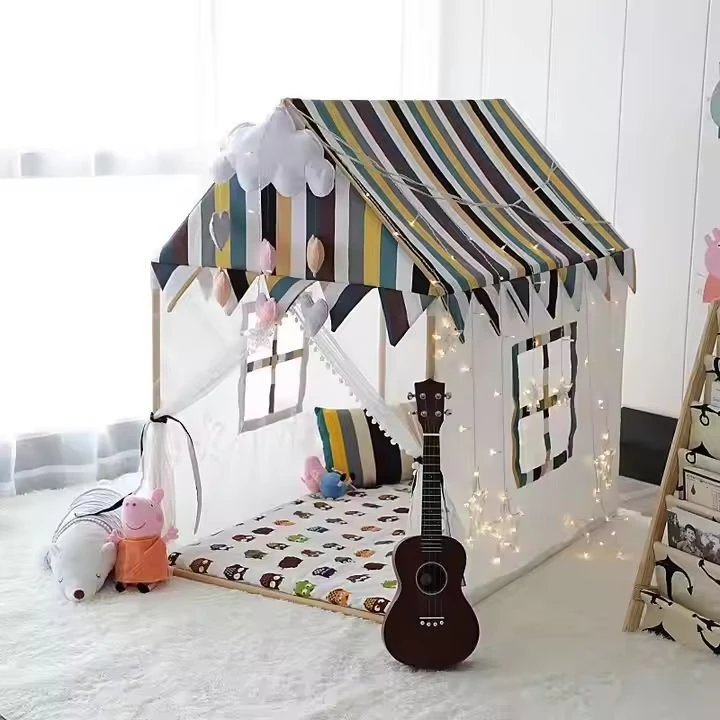
If you are interested in tents for kids, we also offer a range of exciting options, such as the Galactic Space Playhouse Tent, the Kids Unicorn Playhouse, and the Hexagonal Castle Kids Tent. These tents are designed with the same attention to quality and stability as our Camouflage Hexagon Tent, ensuring a safe and enjoyable experience for children.
Conclusion
In conclusion, the Camouflage Hexagon Tent has a highly stable structure. Its hexagonal shape provides an inherent advantage in distributing stress evenly, while the high - quality structural components and rigorous testing ensure its durability and resistance to environmental factors. Whether you are a seasoned camper or a beginner, our Camouflage Hexagon Tent is a reliable choice for your outdoor adventures.
If you are interested in purchasing our Camouflage Hexagon Tent or have any questions about its stability or other features, please feel free to contact us for procurement discussions. We look forward to working with you to meet your camping needs.
References
- "The Science of Tent Design" by Outdoor Manufacturing Journal
- "Structural Stability in Tents" by Camping Research Institute


